Context
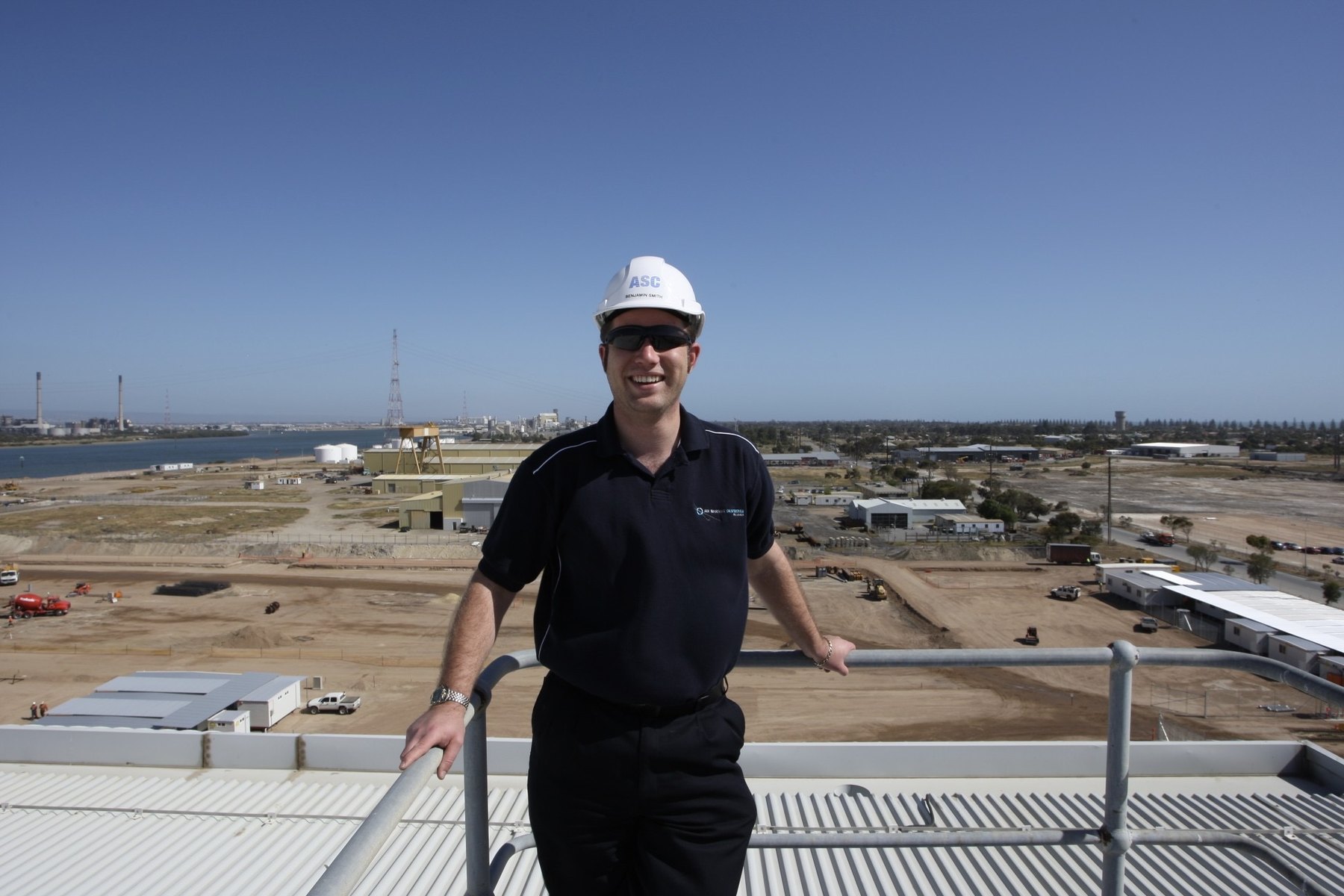
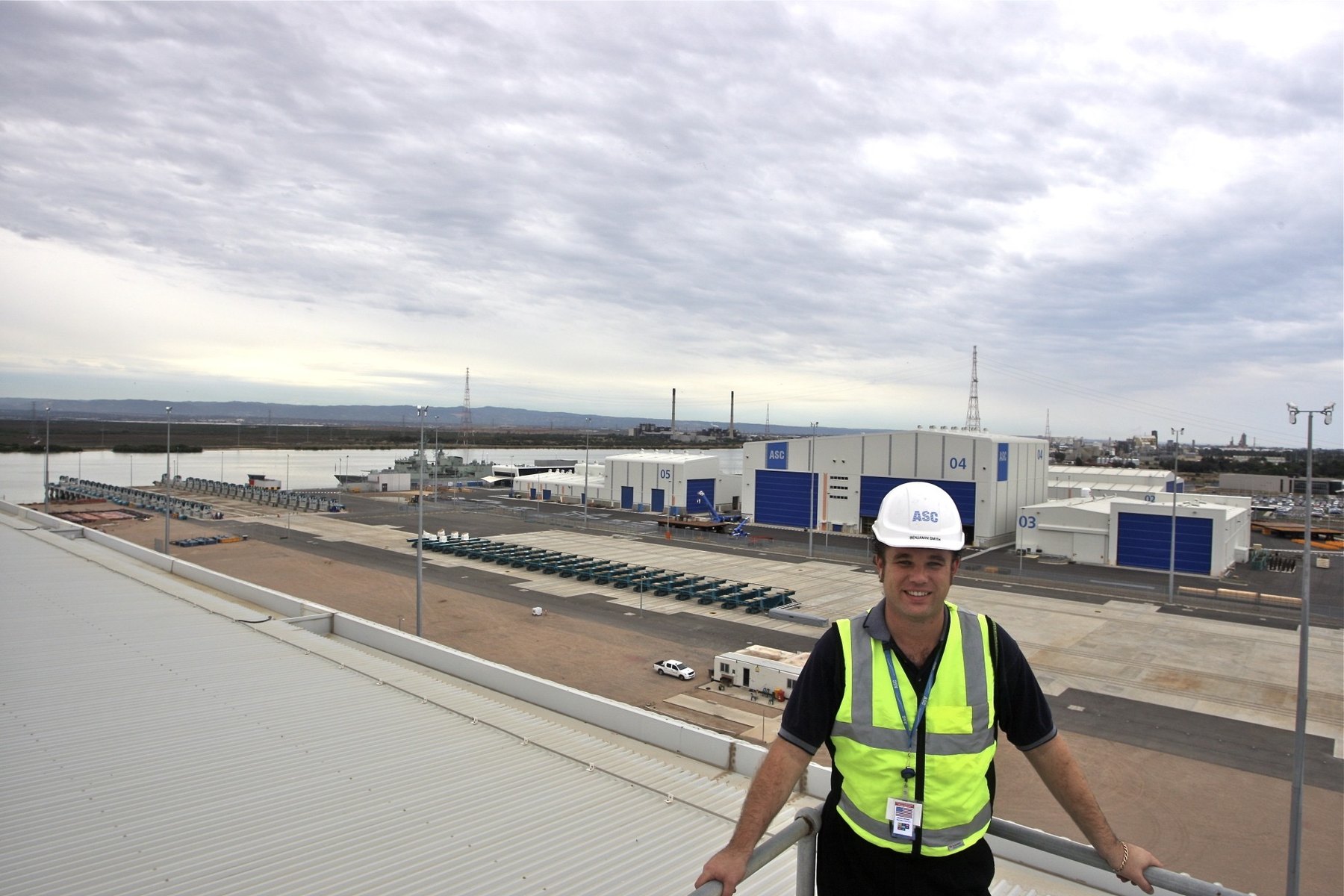
The timelapse camera was the first project Benjamin commenced after joining ASC. It was completed within his first year and then operated until the end of Air Warfare Destroyer construction.
The purpose was to capture the build of the shipyard and the construction of the Air Warfare Destroyers as a historic record, executive communications asset and public-facing proof of progress on one of Australia’s most significant defence construction programs.
Problem
The concept existed before Benjamin started, but previous attempts had stalled because the physical placement, camera control, environment, power and remote-management requirements made the project difficult to implement reliably.
The cameras had to operate for years, survive an exposed physical environment, be controlled remotely, capture images on a schedule and produce useful material without requiring constant manual intervention.
Benjamin’s Role
Benjamin designed the solution from scratch, implemented it and maintained it until he departed ASC. He converted a concept that had been considered too difficult into a working production system that operated over years, captured a historic construction record and supported communications activity long after the initial implementation.
What Benjamin Built Or Changed
- Implemented three Canon EOS-1D DSLR cameras to capture different angles of the shipyard and ship builds.
- Designed a custom-built air-conditioned enclosure mounted on top of the submarine shed.
- Added remote power and environmental monitoring so the enclosure and equipment could be monitored, controlled and alerted on.
- Connected cameras to the corporate network for remote control and scheduled image capture every 10 minutes.
- Worked through a first-of-kind DSLR deployment pattern after discussions with Canon.
- Created a long-running capture system that supported executive communications, historical evidence, launch material, promotional use and Australian television news coverage.
Stakeholders
ASC leadership, communications stakeholders, ICT stakeholders, facilities stakeholders, the CEO, the Board and public communications stakeholders connected to the shipyard and Air Warfare Destroyer program.
Delivery Approach
The work required practical engineering across facilities, physical mounting, environmental control, network connectivity, remote device management, scheduled capture and long-running operational support.
The implementation preserved a historically significant defence-construction story and turned a stalled idea into a durable communications and public-history asset.
Outcomes
The solution captured the historic build of what was then Australia’s most expensive defence project. The footage was later used in promotions, launches and Australian television news.
It became an early example of Benjamin’s builder pattern: take a stalled idea, identify the physical and technical constraints, design a practical implementation path and keep the system operating long enough to create lasting value.
What It Demonstrates
Practical engineering, persistence, facilities-linked ICT delivery, remote monitoring, media capture design and the ability to connect physical-world constraints with technology systems.